Order by use case
Room-based planning helps buyers avoid duplicate note sizes, unused board formats, and one-off items that do not match daily workflows.
Responsible purchasing in office and education supplies begins with documentation, right-sized ordering, and fewer avoidable substitutions. Post It does not treat sustainability as a slogan on top of a catalog. We help buyers ask better questions about paper source documentation, packaging format, replenishment timing, and whether a product actually fits the room where it will be used. That practical discipline can reduce duplicate orders, stranded inventory, and confusion between similar-looking supplies.
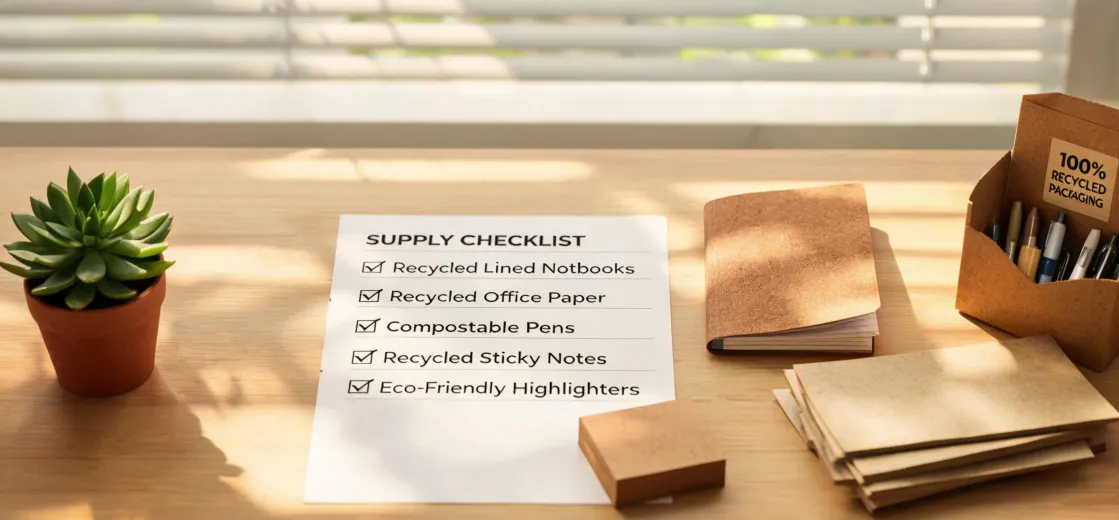
For paper, notebooks, pads, and presentation products, responsible selection often depends on the specific SKU, supplier documentation, and intended use. Post It guidance stays careful. We can help procurement teams request chain-of-custody paperwork when relevant, compare packaging formats, and separate general classroom supplies from special-use products that may require additional review. We avoid broad claims that cannot be proven across every item and focus on the records available for the products under discussion.
Room-based planning helps buyers avoid duplicate note sizes, unused board formats, and one-off items that do not match daily workflows.
When paper sourcing, safety, or packaging information matters, the request should identify the SKU and the record needed for approval.
Term and project review cycles can reduce emergency orders while keeping frequently used classroom and office products available.
Progress is tracked through buyer behavior rather than vague language. A team can measure how many requests include room type, how many repeat orders use an approved category list, how often substitutions are reviewed, and whether documentation questions are being asked before approval deadlines. Those signals help practical supply teams improve without waiting for a perfect system.
Post It can help your team identify duplicate formats, document questions, and right-sized product families for classrooms, offices, or training rooms. Send a few current requests and we will turn them into a clearer review conversation.
Tell us what your classrooms, offices, or meeting spaces need and a supply advisor will prepare a practical assortment.