I bought 300 sticky note pads that didn't stick. Here's how I fixed our office supply system.
Posted on 2026-07-06 by Jane Smith
The Tuesday morning that changed everything
It was September 2022. I remember the date because it was the morning after our Q3 all-hands meeting. I walked into the supply closet—and there they were. Three hundred boxes of sticky notes. My order. Sitting untouched.
Not just any sticky notes either. I'd spec'd them out myself: the Post-it Super Sticky Notes, the big 4x6 inch ones in assorted neon colours. Sounded great on paper. Looked great in the catalog. But here's what I didn't know.
I'd ordered the standard adhesive version instead of the super sticky. (Yeah, I know now. Embarrassing.) The vendor shipped exactly what I ordered. The problem? They didn't stick to anything except paper. On a whiteboard? Dead in five minutes. On a painted wall? Forget it.
$890. Straight to the trash. Plus the 2-week delay while we rush-ordered replacements (thankfully, Post-it Easel Pads with their built-in adhesive strips saved our brainstorming sessions in the meantime).
That's the day I stopped treating office supplies like a commodity. And started treating them like the operational backbone they are.
How one mistake became a system
Look, I'm not a procurement expert. I'm the guy who handles B2B orders for our team—about 45 people across three floors. Before that disaster, I was what you'd call... let's say optimistic about product selection. I'd see "removable" and think great, less mess. Not will this hold up a quarterly report on a wall for 8 hours?
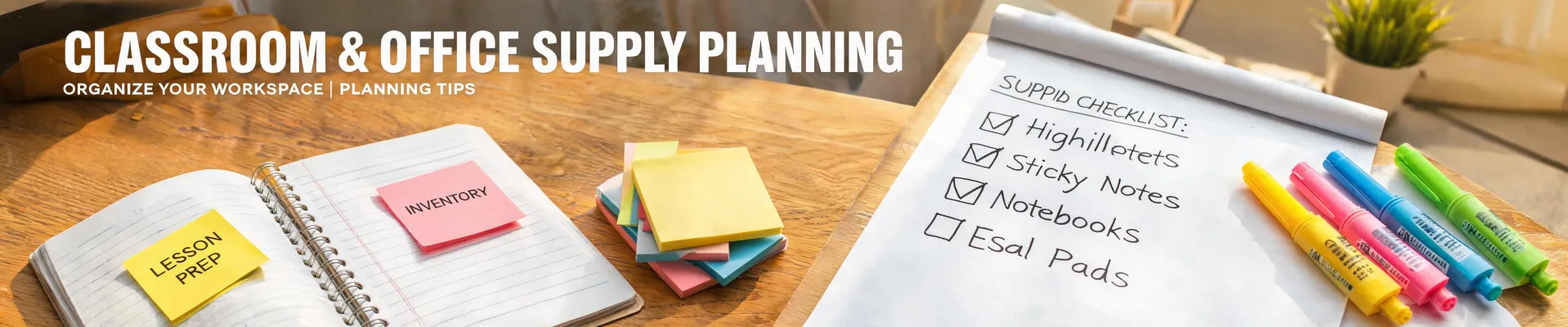
So after the third similar mistake (wrong easel pad size, wrong highlighter colour for our document review process), I created a checklist. It lives on our team's shared drive now. Here's what it looks like:
My Post-it product selection checklist (born from failure)
- Adhesive strength needed — Standard (note-to-note, temporary marking) vs. Super Sticky (walls, whiteboards, long-term) vs. Extreme (rough surfaces, industrial)
- Surface compatibility — Painted drywall? Glass whiteboard? File folder? Each behaves differently
- Dispenser or bulk — Pop-up dispensers save desk space but cost more upfront. We use them for shared areas, bulk for individual desks.
- Size-to-task ratio — 3x3 for quick reminders, 4x6 for capture sessions, flags for page marking in documents
- Actual use case — Brainstorming? Project planning? Filing? Each calls for a different product line
I know—sounds obvious written out. But before I systematised this, I was just guessing. (And guessing wrong, apparently.)
The moment I saw the light
When I finally compared our rush orders versus standard orders over a full calendar year—same product categories, different request urgency—I had my contrast insight. We were spending 40% more on artificial emergencies because we didn't have the right supplies stocked from the beginning.
Think about that. Forty percent. Not because the products were expensive. Because we kept buying the wrong things—then paying rush shipping to fix our mistakes.
Seeing the spreadsheet laid out like that... it was a gut punch, honestly. But it also made the fix obvious.
What we standardized on
We now keep a core inventory of five Post-it product lines. No more guessing:
- Post-it Super Sticky Notes (4x6, assorted) — for meeting capture and wall-based collaboration
- Post-it Durable Filing Tabs — for client project binders that actually get opened and closed daily
- Post-it Labeling Tape (removable version) — for temporary file folder labels, cable management, and inventory bins
- Post-it Easel Pads (plain, 2-pack) — for brainstorming sessions, workshops, and our weekly stand-up
- Post-it Whiteboard Cleaner — because a dirty whiteboard is a deal-breaker for any planning session
I also learned something about cleaning dry erase boards the hard way—more on that in a minute.
Bonus lesson: How to clean a dry erase board (and why it matters)
This sounds trivial. But if you manage an office where people actually use whiteboards (for project planning, sprint retrospectives, whatever), you've seen the ghost stains. Those faint shadows of marker that never really go away.
I made the mistake of using household cleaner once. Big mistake. It stripped the coating, and that board was never the same. Here's what actually works:
- Use a dedicated whiteboard cleaner — The Post-it brand cleaner works. So do most commercial spray cleaners designed for dry erase boards.
- Microfiber cloth only — Paper towels leave lint. Regular cloths can scratch. Microfiber is the sweet spot.
- Weekly maintenance — Don't wait until it looks terrible. A quick wipe every Friday keeps the board fresh.
- Old marker trick works — If you have stubborn ghosting, scribble over it with a fresh black marker before cleaning. The solvent in the new marker helps loosen the old residue.
The real bottom line
I've now caught 47 potential ordering errors using that checklist (yes, I counted). That's 47 times we avoided a repeat of the $890 disaster. In the past 18 months, we've saved—ballpark—roughly $4,000 in avoided waste and rush fees.
But honestly, the numbers aren't the point. The point is: an informed customer makes faster decisions and fewer mistakes.
I'd rather spend 10 minutes explaining product differences to a team member than deal with mismatched expectations—or another closet full of sticky notes that don't stick.
So if you're the person in your organisation who handles office supply ordering (or even if you just care about having the right tools), take the time to understand what you're buying. Ask the questions. Make the checklist.
Your future self—and your budget—will thank you.

Jane Smith
I’m Jane Smith, a senior content writer with over 15 years of experience in the packaging and printing industry. I specialize in writing about the latest trends, technologies, and best practices in packaging design, sustainability, and printing techniques. My goal is to help businesses understand complex printing processes and design solutions that enhance both product packaging and brand visibility.