How I Learned to Stop Worrying and Love the Post-it Note Dispenser (and Finally Got the Right Glue Stick)
Posted on 2026-07-01 by Jane Smith
The Day the Dispenser Gave Up on Me
It was a Tuesday morning in early September 2023. I was standing in front of our communal worktable, staring at a Post‑it Pop‑up Dispenser that had clearly been through a war. The last refill – a generic brand someone ordered from a discount site – had jammed so badly that the spring mechanism was bent. My team had resorted to peeling notes off the sticky edge of someone else’s monitor. Look, I’m no office supply snob. But when you’re managing supply orders for a 25‑person marketing team, you learn pretty quickly that cheap refills cost more than they save.
Here’s the thing: I used to think all sticky notes were basically the same – yellow squares with a weak adhesive. Why pay extra for the brand name? That logic worked for about six months. Then the jams started. Then the notes wouldn’t stick to whiteboards. Then the glue that did work left residue on the wall. (We’re still scrubbing that off, by the way – circa October 2024.) The real killer? A $340 order of generic refills that had to be tossed because they didn’t fit our dispensers. That’s when I started keeping a checklist.
The Refill Rabbit Hole
If you’ve ever searched “how to refill a Post‑it note dispenser,” you probably found a 30‑second video showing you how to pop a new pack in. Easy, right? Wrong. The problem isn’t how – it’s which. Post‑it makes at least four different dispenser models: the standard Pop‑up, the Super Sticky Pop‑up (the one with the green stripe), the easel pad dispenser, and the desktop cube. Each takes a different refill. And the non‑brand refills? They’re a gamble.
I once ordered a case of “compatible” refills (saved $58 versus 3M’s price). The result? Every third note stuck to the second note, pulling out two at once. The glue was so weak that a memo would fall off a monitor in two hours. I spent a full afternoon unjamming dispensers. That experience – which I now call “The September Jam of 2023” – taught me to always check the SKU. Post‑it’s official refills (like the 654‑9SSPP for standard dispensers) are designed to work with the spring tension. Third‑party ones? Maybe, maybe not.
The Great Glue Stick Confusion
While I was refactoring our refill ordering, I stumbled on another disaster waiting to happen: the Post‑it Note Glue Stick. Yes, it’s real. It’s a repositionable adhesive stick for those times you need to attach a note to a non‑standard surface – like a window, a binder, or a colleague’s laptop (don’t ask). But here’s where I made my mistake: I bought the permanent glue stick by accident.
Why does this matter? Because the whole point of Post‑it is repositionability. Slapping a permanent adhesive note onto a client proposal and then needing to move it? That’s a one‑way ticket to ripped paper. I’d ordered 24 glue sticks – thought I was being proactive. The packing slip said “Permanent Adhesive Stick” but the product image online was ambiguous. I didn’t notice until we’d used five of them. Repair cost? $1,200 in reprinted proposals plus a late‑night design rework. The upside was $12 saved per dozen. The risk? Missed deadlines. I kept asking myself: is $12 worth potentially losing a client? No. No it’s not.
The Turning Point: A Checklist Born from Pain
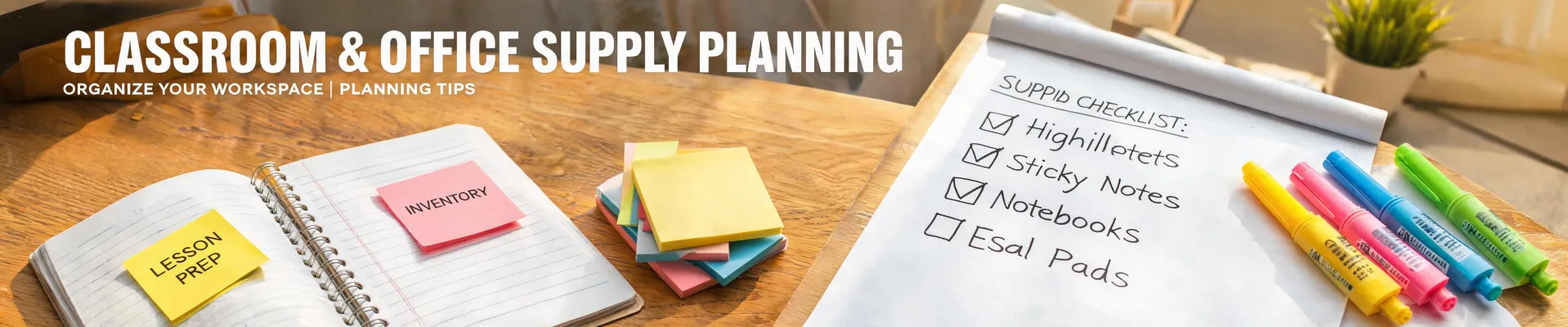
After the third refill fiasco in Q1 2024, I sat down and created a pre‑order verification checklist. It’s living on our shared drive now, and it’s saved us at least 47 potential errors in the past 18 months. The rules are simple:
- Always verify the dispenser model – check the bottom sticker or measure the note size (3×3 vs. 3×5 vs. 4×6).
- Only order official Post‑it refills – the trifecta of glue quality, pop‑up reliability, and surface compatibility.
- Check the glue stick packaging – “repositionable” must appear prominently. If it says “permanent,” you’ll regret it.
- Include the SKU in every PO – so receiving can match before opening boxes.
I also started tracking costs. A case of official Post‑it refills (10 packs) runs about $24.99 (as of January 2025; verify current pricing at post‑it.com). The generic alternative was $16.99. That $8 savings per case cost us roughly $890 in wasted product and labor over six months. Do the math: $890 ÷ $8 = 111 cases before we break even on the “deal.” We never ordered that many. So the “savings” were a mirage.
What I’d Tell My 2020 Self
Five years ago, I’d have argued that brand loyalty is a trap. In 2020, maybe it was – the generic sticky note market had improved, and some cheaper options worked for general note‑taking. But by 2025, the industry has evolved. Post‑it improved its Super Sticky adhesive (the one that holds on vertical surfaces for weeks) and redesigned the Pop‑up dispenser to be more reliable. Third‑party makers haven’t kept up. What was best practice in 2020 may not apply in 2025. The fundamentals haven’t changed – you still want a note that sticks when you want it and releases when you need it – but the execution has transformed.
So glad I finally systematized our ordering. I almost gave up and just bought whatever was cheapest on Amazon. Would have been a disaster. There’s something satisfying about walking past the supply closet now and seeing every dispenser loaded with the correct refill, every glue stick clearly labeled “repositionable.” After three quarters of messing it up, that small victory feels huge.
If you’re responsible for office supply ordering – especially if you’re refilling Post‑it dispensers or stocking glue sticks – take a minute to double‑check. The wrong refill doesn’t just waste $20; it wastes a morning of unjamming and the trust of your team. Trust me. I’ve got the checklist to prove it.
Pricing and product availability as of January 2025; verify current rates at post‑it.com.

Jane Smith
I’m Jane Smith, a senior content writer with over 15 years of experience in the packaging and printing industry. I specialize in writing about the latest trends, technologies, and best practices in packaging design, sustainability, and printing techniques. My goal is to help businesses understand complex printing processes and design solutions that enhance both product packaging and brand visibility.